

Mostrar mensagens com a etiqueta weblinks. Mostrar todas as mensagens
Mostrar mensagens com a etiqueta weblinks. Mostrar todas as mensagens
07/01/2011
13/11/2010
'Sintetizando'...

Os Chromatics – trio norte-americano que, em 2007, saiu com o álbum Night Drive pela Italians Do It Better – tem duas datas agendadas em Portugal. A Everything is New, promotora do concerto, confirmou actuações no Teatro Sá da Bandeira, no Porto, a 30 de Novembro e no dia 2 de Dezembro no Lux, em Lisboa.
Prelúdio
Night drive
I take a drive in my car
I take a drive in my car
I see the sun disappear
I see the sun disappear
Oh, little stranger, bring my baby back to me
Oh, little stranger, bring my baby back home
My leather glove grips the wheel
My leather glove grips the wheel
I see the sun disappear
I see the sun disappear
Oh, little stranger, bring my baby back to me
Oh, little stranger, bring my baby back home
I took a drive in my car
I saw the sun disappear
My leather glove gripped the wheel
I saw the sun disappear
Bring my baby back
Bring my baby back
Windows down and my hair in the breeze
Windows down and my hair in the breeze
I see the sun reappear
I see the sun reappear
Oh, little stranger, bring my baby back to me
Oh, little stranger, bring my baby back home
Bring my baby back home
I Acto
Baby
II Acto
Hands in the dark
III Acto
In the city
# MySpace

04/11/2010
Coming soon...

Stay With Me Baby – Duffy
#
Well, well, well – Duffy
* Retirado do novo disco com lançamento agendado para 21 de Novembro. Endlessly foi gravado em parceria com o mestre Albert Hammond e sucede mega-êxito do álbum de estreia Rockferry.
# Site oficial | MySpace | Facebook
26/10/2010


25/03/2010
27/02/2010
Alice in Wonderland (1903)
Alice in Wonderland (1903)
Música: Jill in the Box
Composição e interpretação: Wendy Hiscocks
A legenda que acompanha:
The first-ever film version of Lewis Carroll's tale has recently been restored by the BFI National Archive from severely damaged materials. Made just 37 years after Lewis Carroll wrote his novel and eight years after the birth of cinema, the adaptation was directed by Cecil Hepworth and Percy Stow, and was based on Sir John Tenniel's original illustrations. In an act that was to echo more than 100 years later, Hepworth cast his wife as the Red Queen, and he himself appears as the Frog Footman. Even the Cheshire cat is played by a family pet.
With a running time of just 12 minutes (8 of which survive), Alice in Wonderland was the longest film produced in England at that time. Film archivists have been able to restore the film's original colours for the first time in over 100 years.
# Links
| Cf. também: |
 |
| Alice in Wonderland (1966) |
| Hepworth, Cecil (1874-1953) |
| Stow, Percy (1876-1919) |
11/02/2010
Dark Was The Night


* fotos: Sarah Meadows
My Brightest Diamond - Feeling Good
* retirado da muito interessante compilação Dark Was The Night
# Playlist para ouvir AQUI
... com os cumprimentos da casa!
20.º Aniversário da Libertação de Nelson Mandela
via website de Nelson Mandela
(...)
Nelson Mandela celebra o 20.º aniversário da sua libertação
Alguns dias antes do 20.º aniversário da sua libertação, Nelson Mandela assistiu a um encontro, na intimidade da sua casa de Joanesburgo, com a família, amigos e camaradas.Alguns dos membros do Comité Nacional para a Libertação, criada para coordenar o regresso de Mandela a sua casa após a saída da prisão, partilharam memórias num almoço oferecido pela filha mais nova de Nelson Mandela, Zindzi. Mandela juntou-se ao grupo para brindar com champanhe e bolo e conversou com os convidados durante mais de uma hora.
Cyril Ramaphosa, antigo presidente do Comité Nacional de Libertação, pediu um brinde a Nelson Mandela, no qual o referiu como uma inspiração, acrescentando que os seus sacrifícios para libertar o país nunca serão esquecidos.
(...)
Um tributo a Nelson Mandela
Nadine Gordimer
Escritora sul-africana, Prémio Nobel de Literatura
Militante contra o apartheid
Escritora sul-africana, Prémio Nobel de Literatura
Militante contra o apartheid
Uma vez escrevi que quaisquer que fossem os horrores inumanos do apartheid vivíamos num país onde ainda havia heróis.
[...]Durante vinte e sete anos Nelson Mandela esteve preso no meio de nós, uma vez que a ilha de Robben está à vista da Table Mountain e a prisão de Pollsmoor é parte da cidade de Cape Town. Enterrada. Silenciada. Era proibido reproduzir nos media as suas palavras ou a sua foto. Não a força da sua dedicação invencível à liberdade do seu povo, qualquer que fosse o seu custo pessoal: para Mandela «Os muros não fazem uma prisão, Nem as barras de ferro uma gaiola». Os negros sul-africanos tinham um sentido da resistência do que eles resistiam: as humilhações brutais da prisão eram para eles experiências diárias das ilegalidades que sofriam e de inúmeras outras restrições racistas que criaram durante gerações uma imensa prisão de população não-criminal na África do Sul. Enquanto ele e os seus camaradas na ilha de Robben eram mandados partir pedras e apanhar algas do oceano Atlântico, as pessoas vulgares entre a população negra eram aprisionadas pelas autoridades como trabalho escravo. O seu povo guardava-o nas palavras das suas canções e cânticos, nas formas desafiadoras de resistência activa que ele partilhou com eles, e nas exigências da sua libertação feitas pela liderança no exílio juntamente com o povo nas suas casas. Em todas as notícias que chegavam da prisão, sentíamos que a percepção de si próprio era sempre parte de tudo isto, da vivência com o seu povo; recebiam-nas através dos muros da prisão ao mesmo tempo que o guardavam em si próprios.
[...]
Nós, na África do Sul e no mundo temos connosco, como uma pedra-de-toque viva contra qualquer profanação do espírito humano, Nelson Mandela. Uma vez escrevi que quaisquer que fossem os horrores inumanos do apartheid vivíamos num país onde ainda havia heróis. Tínhamos a grandeza de Albert Luthuli, Oliver Tambo, Walter Sisulu, Steve Biko, Bram Fischer, Dr. Dadoo, Robert Sobukwe, Helen Joseph, como se fossem uma jangada viva de nomes numa onda invencível da possibilidade de liberdade.
Nós tínhamos Nelson Rolihlahla Mandela.
Ainda o temos, carregando a consciência da liberdade, agora, personificando de forma destemida os desafios morais de uma nova era na responsabilidade humana. Para os outros e para nós próprios.
[...]
(...)
*
Se os seres humanos temos vontade, podemos exigir-lhe que sirva e defenda a vida em vez de ofendê-la e humilhá-la. Isso é o que sempre fez Nelson Mandela, um homem de vontade.José Saramago
*
A tua liberdade foi a nossa. A tua vitória, a vitória de todos. E o teu exemplo abriu um caminho de luz e rebeldia no pensamento e no coração da juventude do nosso tempo.Marcos Ana
Poeta espanhol, 23 anos preso político nos cárceres franquistas
Autor de Digam-me como É Uma Árvore
*
Mandela não deixes que os brancos nos dominem. Ajuda-nos! As pessoas estão a morrer. Dormimos nas montanhas.
Interpretado por Sechaba, Zâmbia
* com a devida vénia à Fundação José Saramago
31/01/2010
'Mais voici qu'une fille est apparue'
Suspendue au-dessus de toi
Dans un hélicoptère, un hélicoptère
Immobile, je ne vois que toi
De mon hélicoptère, mon hélicoptère
Je ne vois ni le soleil ni la mer,
Ni même les algues amères
Je ne vois vraiment que toi
Qui ne sais pas que je suis là
Dans cet hélicoptère, cet hélicoptère
Mais voici qu'une fille est apparue
Qui s'allonge toute nue
Sur le sable auprès de toi
Suspendue au-dessus de toi
Dans un hélicoptère, un hélicoptère
Immobile, je ne vois que toi
De mon hélicoptère, mon hélicoptère
Je ne vois ni le soleil ni la mer,
Ni même les algues amères
Je ne vois vraiment que toi
Qui ne sais pas que je suis là
Dans cet hélicoptère, cet hélicoptère
Suspendue au-dessus de toi
Dans un hélicoptère, un hélicoptère.
Lili Bulle - L'helicoptere
# MySpace
* clip realizado por Arthur Delloye e produzido por Pivoine Bercholz.
29/01/2010
'To a glimpse of how green it was on the other side'
Beyond the horizon of the place we lived when we were young
In a world of magnets and miracles
Our thoughts strayed constantly and without boundary
The ringing of the division bell had begun
Along the Long Road and on down the Causeway
Do they still meet there by the Cut?
There was a ragged band that followed in our footsteps
Running before time took our dreams away
Leaving the myriad small creatures trying to tie us to theground
To a life consumed by slow decay
The grass was greener
The light was brighter
With friends surrounded
The nights of wonder
Looking beyond the embers of bridges glowing behind us
To a glimpse of how green it was on the other side
Steps taken forwards but sleepwalking back again
Dragged by the force of some inner tide
At a higher altitude with flag unfurled
We reached the dizzy heights of that dreamed of world
Encumbered forever by desire and ambition
There's a hunger still unsatisfiedOur weary eyes still stray to the horizon
Though down this road we've been so many times
The grass was greener
The light was brighter
The taste was sweeter
The nights of wonder
With friends surrounded
The dawn mist glowing
The water flowing
The endless river
Forever and ever
Pink Floyd - [The Division Bell] High Hopes
* sobre quadros de Vladimir Kush

David M. Bowers, Fountain of youth


Jeux de masque, jeux de rôles, jeu de dupe...
(...) ou de l'autre côté du miroir déformant...
On s'y plaît ou on le fuit,
on s'y effraye mais on ne s'ennuie...
on s'y effraye mais on ne s'ennuie...
O estranho universo das inquietantes estranhezas de Bowers. Este não-sei-que-pense do que gosto-mas-também-não-gosto. O lugar do 'não-gosto' a interessar-me subitamente muito mais do que o previsível e escorreito lugar do 'gosto'. Esta coisa de artista farsante, a quem a mão foge de imprevisto para vazar um punhado de saltimbancos pictóricos que, de quando em vez, na graça de um providencial malabarismo mais insólito, lhe salvam a arte do desconchavo do retrato.
27/01/2010
O rizoma

Orçamento de Estado 2010
Passatempo:
descubra que circunferência corresponde ao Ministério da Cultura.
descubra que circunferência corresponde ao Ministério da Cultura.
( Uma dica: não é verde, nem azul, nem laranja)
Solução: se não conseguiu encontrar, clique AQUI e escolha a opção 'ampliar' para activar a função 'ver com lupa'..
26/01/2010
'Lost Gloves'

O filho de Paul Auster, Daniel Auster, tem um website.
O João Tordo também. E o pai dele, o Fernando, começou um blog.
23/01/2010
Fizeram-me sorrir...

You Dropped Food on the Floor. Do You Eat It?
The 30-Second Rule, A Decision Tree, de Audrey Fukman e Andy Wright
via SFoodie

via Origin68
20/01/2010

18/01/2010
Só para sublinhar o meu amor incondicional por estes rapazes
AIR - So Light is her Footfall
O novo single do álbum Love 2. Videoclip realizado por Edouard Salier
# Site oficial
17/01/2010

07/01/2010
'The Lady Noir Affair'
The Lady Noir Affair por Lady Dior
Realização: Olivier Dahan
Actriz: Marion Cotillard
# Site oficial: Lady Dior
01/01/2010
May all our best whishes come true!
Yee Peng Lanna ou Festival Loy Krathong, uma gigantesca largada de lanternas luminosas aos céus da noite chamada "khom fai" ou "khoom fay".
Acontece anualmente num mosteiro budista em Mae Jo, perto de Chiang Mai, na Tailândia.
Para ver durante mais algum tempo: aqui
31/12/2009
Hypatia de Alexandria


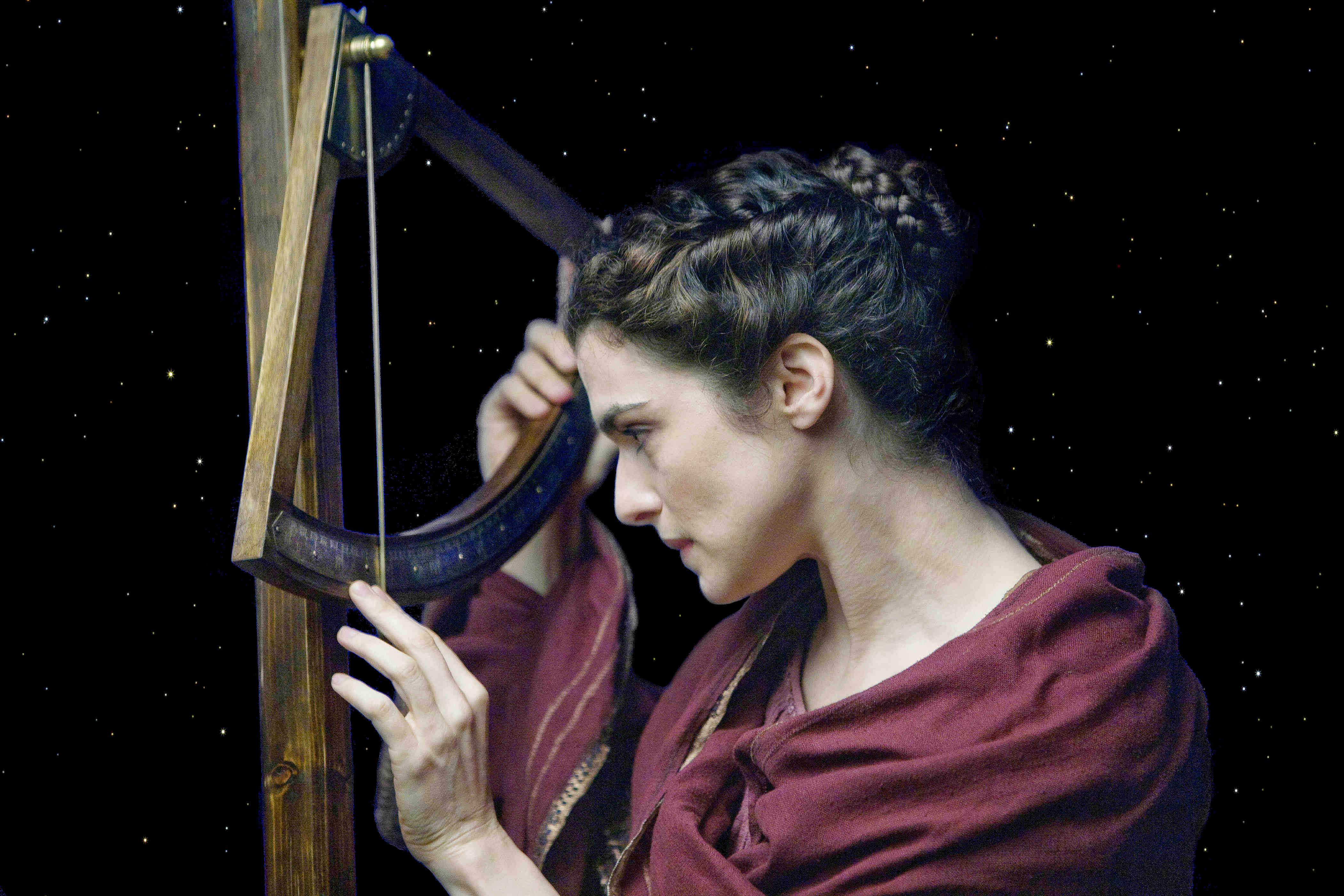


Synesius: Why do you insist in questioning things? Can't you just accept truth?
Hypatia: You have your religion. I'm a philosopher. You don't question what you believe. I must.
* excerto do filme Ágora
'A Woman ahead of her time'
She was a woman in a world of men. She was a woman who wanted to lead her life as a man would have, with the same freedom to do research and devote herself to philosophy, like her father. Hence the decision never to give herself to any man, so she would never be robbed of the freedom she needed. She believes in reason and doubt. And she's not willing to step down on that.
Alejandro Amenábar sobre Hypatia
# Site Oficial

Hypatia, 1885, por Charles William Mitchell (1854 - 1903)
Sugestões de leitura:
# Tom O'Neil no Armanium Magnum: "Agora" and Hypatia - Hollywood Strikes Again
# Mangasar Mugurditch Mangasarian 1859-1943, 'The martyrdom of Hypatia, or, The death of the classical world', in The Rationalist, Maio de 1915

Hypatia representada numa ilustração de 1908
Sobre Hypatia:
- Entrada da Encyclopaedia Britannica
- Entrada na Wikipedia
- Breve biografia, online no site da Faculdade de Ciências da Universidade de Lisboa
- Hypatia em Garth Kemerling's Philosophy Pages
- The Primary Sources for the Life and Work of Hypatia of Alexandria por Michael Deakin.
- J. J. O'Connor and E. F. Robertson: Hypatia of Alexandria, University of St. Andrews, Scotland.
- The Life of Hypatia from The Suda. A primeira tradução inglesa que se conhece desta fonte.
- The Life of Hypatia by Socrates Scholasticus. Biografia que se foca no episódio do seu assassinato.
- The Life of Hypatia by John, Bishop of Nikiu. Escritor cristão que aplaude a morte de Hypatia sob o argumento: "she was devoted at all times to magic, astrolabes, and instruments of music."
- Hypatia of Alexandria, transcrição de uma conversa com Michael Deakin, arquivada em http://www.abc.net.au/rn/science/ockham/or030897.htm
- Remembering Hypatia homepage do romance de Brian Trent
- "Flow Down Like Silver, Hypatia of Alexandria homepage do romance de Ki Longfellow
- Colecção de weblinks sobre Hypatia, compilada por Howard Landman em http://www.polyamory.org/~landman/Hypatia/
- A. Fitzgerald, Letters of Synesius of Cyrene, London, 1926. (Letter 154 of Synesius of Cyrene to Hypatia).
- Synesius (402). Letter 15: A Hydrometer. http://www.livius.org/su-sz/synesius/synesius_letter_015.html.
- Synesius (c. 405). On an Astrolabe. http://www.livius.org/su-sz/synesius/synesius_astrolabe_3.html
- Scholasticus, S. (c. 439). Ecclesiastical History. A modern translation is available at http://www.newadvent.org/fathers/26017.htm. Book VII, Chapter 15 contains all of the information on Hypatia.
- "Hypatia of Alexandria: A woman before her time". The Woman Astronomer. November 11, 2007. http://www.womanastronomer.com/hypatia.htm. Retrieved 2007-12-03.
- Hypatia of Alexandria: Defender of Reason Hypatia's impact on the course of human history.
- The History Of Hypatia, A most Impudent School-Mistress of Alexandria: Murder'd and torn to Pieces by the Populace, In Defence of Saint Cyril and the Alexandrian Clergy. From the Aspersions of Mr. Toland.
- Toohey, Sue (2003). "The Important Life & Tragic Death of Hypatia". Skyscript.co.uk. http://www.skyscript.co.uk/hypatia.html. Retrieved 2007-12-09.
- Christian Wildberg, in Hypatia of Alexandria - a philosophical martyr, The Philosopher's Zone, ABC Radio National (4 April 2009).
- "Hypatia: Mathematician, Astronomer, and Philosopher" por Nancy Nietupski em Alexandria 2. Uma discussão admirável sobre os factos conhecidos e as suas implicações.
- Hypatia of Alexandria por Maria Dzielska. Harvard: Harvard University Press, 1995.
- Historical Dictionary of Feminism, by Janet K. Boles, Diane Long Hoeveler. pp 166.


E-books:
- Hypatia of Alexandria - Google Livros
- Hypatia: new foes with an old face Vol.I - Google Livros
- Hypatia or New Foes with an Old Face Vol II- Google Livros
- Hypatia, Andromeda, and Other Poems - Google Livros

Uma curiosidade ou um detalhe pleno de significados:
Quando o pintor Raphael apresentou os primeiros esboços do que viria a ser o fresco Escola de Atenas ao Vaticano, o Papa perguntou-lhe quem era a mulher representada entre os filósofos Parménides e Diógenes. Raphael respondeu: «Hypatia, a aluna mais famosa da Escola de Atenas. Foi professora de filosofia, matemática e astronomia na Universidade de Alexandria e sem dúvida uma das maiores pensadoras de todos os tempos.”
O Papa replicou então: «Retira-a da obra. Os conhecimentos que representa vão contra a fé dos crentes! Fora isso, o teu trabalho é aceitável.”
The Bishop's words struck at the heart of Raphael's original artistic conception. It had been the artist's intention to depict Hypatia standing alone in the center foreground, located, spatially, between the viewers of the fresco and the central figures of Plato and Aristotle, as homage to her unique role, temporally, as guardian and transmitter of their ancient wisdom and inquiring spirit to their intellectual heirs in future eras.
Yielding to the power of the purse strings, Raphael's initial reaction was simply to omit the figure from his final working drawing, but he then proceeded instead to disguise his original intention as an intimate gesture to his holy patron. In an area which had been vacant in the preliminary compositional sketch, directly behind and between the images of Pythagoras and Parmenides, the artist's final working drawing, the “cartoon” (detail), bears the image of Hypatia, her dark skin recast to a very pale white and her facial features altered to resemble those of the “beloved” nephew of the Pope. Raphael thereby restored Hypatia to a rightful place in his masterpiece among her intellectual peers.
While the figure of Hypatia was displaced and disguised, her posture and demeanor were preserved. Unlike almost all of the other characters in the fresco, Hypatia is depicted, not engaged in philosophic inquiry with her peers, but instead directing her gaze out of the painting, towards the viewer standing in front of the fresco. The only other figures so depicted are those of the historian, Diogenes of Laertius, and the artist himself. Raphael thereby symbolizes the roles of the chronicler, the curator, and the artist in projecting, into the future, the intellectual and spiritual thrust of the School of Athens.
(Also, whereas the figure of Hypatia was displaced, the figure of Heraclitus is the only major figure in the entire work that was totally absent from Raphael's final working drawing, the “cartoon”, of all the figures in the fresco. In fact, subsequent examination of the fresco confirms that the figure of Heraclitus was painted in on an area of fresh plaster put on after the adjacent figures were completed. This block-like figure plugged up the visual hole, the expanse of marble steps and flooring in front of Plato and Aristotle, left unoccupied by Hypatia's displacement.)
Thus, the effeminate, white-robed figure in Scuola di Atene serves here to represent the first significant female philosopher, and the last philosopher, of the ancient age. The pale complexion and juvenile visage of Pope Julius II's beloved nephew was apparently sufficient distraction to have prevented the Pope's recognition of Raphael's representation of Hypatia of Alexandria, an official enemy of the Church, whose martyrdom at the hands of Nitrian monks had signaled the death of the classical world.
fonte

 Hypatia and the Philosophers of Alexandria
Written by Ginny Adair, Class of 1998 (Agnes Scott College)
The life of Hypatia was one enriched with a passion for knowledge. Hypatia was the daughter of Theon, who was considered one of the most educated men in Alexandria, Egypt. Theon raised Hypatia in a world of education. Most historians now recognize Hypatia not only as a mathematician and scientist, but also as a philosopher.Historians are uncertain of different aspects of Hypatia's life. For example, Hypatia's date of birth is one that is highly debated. Some historians believe that Hypatia was born in the year 370 AD. On the other hand, others argue that she was an older woman (around 60) at the time of her death, thus making her birth in the year 355 AD.
Throughout her childhood, Theon raised Hypatia in an environment of thought. Historians believe that Theon tried to raise the perfect human. Theon himself was a well known scholar and a professor of mathematics at the University of Alexandria. Theon and Hypatia formed a strong bond as he taught Hypatia his own knowledge and shared his passion in the search for answers to the unknown. As Hypatia grew older, she began to develop an enthusiasm for mathematics and the sciences (astronomy and astrology).
Most historians believe that Hypatia surpassed her father's knowledge at a young age. However, while Hypatia was still under her father's discipline, he also developed for her a physical routine to ensure for her a healthy body as well as a highly functional mind. In her education, Theon instructed Hypatia on the different religions of the world and taught her how to influence people with the power of words. He taught her the fundamentals of teaching, so that Hypatia became a profound orator. People from other cities came to study and learn from her.
Hypatia's studies included astronomy, astrology, and mathematics. References in letters by Synesius, one of Hypatia's students, credit Hypatia with the invention of the astrolabe, a device used in studying astronomy. However, other sources date this instrument back at least a century earlier. Claudius Ptolemy wrote extensively on the projection used on the plane astrolabe, and Hypatia's father wrote an astrolabe treatise that was the basis for much of what was written later in the Middle Ages. Hypatia did teach about astrolabes as Synesius had an instrument made that was argueably a form of astrolabe.
Hypatia was known more for the work she did in mathematics than in astronomy, primarily for her work on the ideas of conic sections introduced by Apollonius. She edited the work On the Conics of Apollonius, which divided cones into different parts by a plane. This concept developed the ideas of hyperbolas, parabolas, and ellipses. With Hypatia's work on this important book, she made the concepts easier to understand, thus making the work survive through many centuries. Hypatia was the first woman to have such a profound impact on the survival of early thought in mathematics.
Hypatia lived in Alexandria when Christianity started to dominate over the other religions. In the early 390's, riots broke out frequently between the different religions. Cyril, a leader among the Christians, and Orestes, the civil governor, opposed each other. Hypatia was a friend of Orestes and it is believed that Cyril spread virulent rumors about her. In 415 AD, on Hypatia's way home, a mob attacked her, stripped her and killed her with pieces of broken pottery. Later, the mob dragged her through the streets.
Hypatia's life ended tragically, however her life's work remained. Later, Descartes, Newton, and Leibniz expanded on her work. Hypatia made extraordinary accomplishments for a woman in her time. Philosophers considered her a woman of great knowledge and an excellent teacher.

References
- Deakin, Michael. "Hypatia and Her Mathematics," The American Mathematical Monthly, 101, No. 3 (March 1994), 234-243. Available at the MAA web site http://www.maa.org/pubs/calc_articles.html or Jstor (subscription required).
- Deakin, Michael. Hypatia of Alexandria, Mathematician and Martyr, Prometheus Books, Amherst, NY, 2007.
- Hypatia of Alexandria, transcript of a talk by Michael Deakin, archived at http://www.abc.net.au/rn/science/ockham/or030897.htm
- The Primary Sources for the Life and Work of Hypatia of Alexandria by Michael Deakin.
- Knorr, Wilbur. "On Hypatia of Alexandria," in Textual Studies in Ancient and Medieval Geometry, Birkhauser, 1989.
- Dzielska, Maria. Hypatia of Alexandria. Cambridge: Harvard University Press, 1995.
- Osen, Lynn M. Women in Mathematics. United States: Massachusetts Institute of Technology Press, 1974.
- Perl, Teri. Biographies of Women Mathematicians and Related Activities. United States: Addison-Wesley, 1978.
- Koch, Laura Coffin. "Hypatia," Notable Women in Mathematics: A Biographical Dictionary, Charlene Marrow and Teri Perl, Editors, Greenwood Press, 1998, 94-97
- Neugebauer, Otto A., "The Early History of the Astrolabe", from "Astronomy and History: Selected Essays", Springer-Verlag (1983).
- Longfellow, Ki. Flow Down Like Silver: Hypatia of Alexandria (a novel), Eio Books, 2009.
- Dictionary of Scientific Biography
- Biography, BiographyMacTutor History of Mathematics Archives
- Howard Landman's collection of Hypatia WWW links at http://www.polyamory.org/~landman/Hypatia/
- Hypatia of Alexandria, from Cosmopolis.com.
via Agnes Scott College
Resources
- The very large Hypatia Book List
- Dr. M. A. B. Deakin's "The Primary Sources for the Life and Work of Hypatia of Alexandria"
The best place to start if you want to know what we really know about Hypatia, as opposed to the reams of fictionalized accounts of her life. - "The History Of Hypatia", Thomas Lewis, 1721
A partial transcription of a very rare book (I only know of 3 copies in the world). It was written as a reply to John Toland's book of the previous year, and consists mostly of spleen and invective. - "Hypatia, or, New Foes with an Old Face", Charles Kingsley, 1907 edition
NEW! A partial transcription of Kingsley's 1853 novel. - "Hypatia", Elbert Hubbard, 1928 edition
A complete transcription of Hubbard's essay of circa 1908, taken from the 1928 edition printed after his death. - "The martyrdom of Hypatia, or, The death of the classical world", Mangasar Mugurditch Mangasarian, circa 1915
Other resources
- Classroom Activities on Hypatia
- Alexandria magazine
- The Life of Hypatia from The Suda
- The Life of Hypatia by Socrates Scholasticus
- The Life of Hypatia by John, Bishop of Nikiu
- Michael A. B. Deakin's review of Dzielska's book
- Hagith S. Sivan's review of Dzielska's book, also available here.
- biography at St. Andrews
A lot of information with further links. - biography at etext.org
- Kapatel Hypatia page (mostly in Greek - summary in English).
- Hypatia, The Lady Philosopher of Alexandria by Faith L. Justice
- Hypatia
Just a paragraph or two. - Hypatia
Doesn't have any references that aren't found here. - The Library at Alexandria
Not much on Hypatia, but a lot of good general background material, well-organized with many links to other places. - Saint Cyril I: The Pillar of the Faith gives a thoroughly adulatory version of Cyril's life, and attributes Hypatia's murder to "the crowd".
- a brief biography with a few references.
- a short biography with purported quotes.
- a twisted biography from the Hypatia's Web site.
- a bio from Hong Kong
- a brief biography.
- a purported quote.
- Peter Alfeld's Hypatia page.
- Hypatia crater info.
- Ellen Brundige, "The Decline of the Library and Museum of Alexandria"
- The Ptolemaic Legacy
- a short bio from umd.edu.
- an odd email which seems to claim that Hypatia and Diogenes had a son named Deleuze.
- John Servais 2 Feb 1996
- Timothy M. Teeter 2 Feb 1996
- John Servais 2 Feb 1996
- Ted Mayes 3 Feb 1996
- Richard Landes 4 Feb 1996
- Ted Mayes 4 Feb 1996
- Serge Pahaut 4 Feb 1996
- P.D. Snider 4 Feb 1996
- Richard Landes 5 Feb 1996
- Yves Caseau 5 Feb 1996
- Timothy M. Teeter 5 Feb 1996
- B. Bachrach 6 Feb 1996
- Greg Rose 6 Feb 1996
About the struggle between science and "revealed" religion
- A History of the Warfare of Science with Theology in Christendom (link appears to be broken at the moment)
- John J. Kessler, Giordano Bruno: The Forgotten Philosopher (available as BRUNO.TXT on The Skeptic Tank) Actually, there's lots on Bruno available - just do a search on any decent search engine.
via Howard A. Landman
Subscrever:
Mensagens (Atom)
| Top ↑ |