


fotos: Angela M. Ferreira
Porque todo lo que lleva sangre o música
tarde o temprano se reanuda.
Pero cuidado.
Mi carne te conoce,
mis dedos caminaron ya cien veces
en la luz señera de tu cuerpo.
La Boca, Buenos Aires


Porque todo lo que lleva sangre o música
tarde o temprano se reanuda.
Pero cuidado.
Mi carne te conoce,
mis dedos caminaron ya cien veces
en la luz señera de tu cuerpo.
La Boca, Buenos Aires


Les liens entre un être et nous n'existent que dans notre pensée. La mémoire en s'affaiblissant les relâche, et, malgré l'illusion dont nous voudrions être dupes et dont, par amour, par amitié, par politesse, par respect humain, par devoir, nous dupons les autres, nous existons seuls. L'homme est l'être qui ne peut sortir de soi, qui ne connaît les autres qu'en soi, et, en disant le contraire, ment.– Marcel Proust

Sans doute peu de personnes comprennent le caractère purement subjectif du phénomène qu'est l'amour, et la sorte de création que c'est d'une personne supplémentaire, distincte de celle qui porte le même nom dans le monde, et dont la plupart des éléments sont tirés de nous-mêmes.
– Marcel Proust

Notre mémoire et notre cœur ne sont pas assez grands pour pouvoir être fidèles.– Marcel Proust
Tenho amigos que não sabem o quanto são meus amigos. Não percebem o amor que lhes devoto e a absoluta necessidade que tenho deles. A amizade é um sentimento mais nobre do que o amor, eis que permite que o objeto dela se divida em outros afetos, enquanto o amor tem intrínseco o ciúme, que não admite a rivalidade. E eu poderia suportar, embora não sem dor, que tivessem morrido todos os meus amores, mas enlouqueceria se morressem todos os meus amigos! Até mesmo aqueles que não percebem o quanto são meus amigos e o quanto minha vida depende de suas existências … A alguns deles não procuro, basta-me saber que eles existem. Esta mera condição me encoraja a seguir em frente pela vida.
Mas, porque não os procuro com assiduidade, não posso lhes dizer o quanto gosto deles. Eles não iriam acreditar. Muitos deles estão lendo esta crônica e não sabem que estão incluídos na sagrada relação de meus amigos. Mas é delicioso que eu saiba e sinta que os
adoro, embora não declare e não os procure. E às vezes, quando os procuro, noto que eles não tem noção de como me são necessários, de como são indispensáveis ao meu equilíbrio vital, porque eles fazem parte do mundo que eu, tremulamente, construí, e se tornaram alicerces do meu encanto pela vida.
Se um deles morrer, eu ficarei torto para um lado. Se todos eles morrerem, eu desabo! Por isso é que, sem que eles saibam, eu rezo pela vida deles. E me envergonho, porque essa minha prece é, em síntese, dirigida ao meu bem estar. Ela é, talvez, fruto do meu egoísmo.
Por vezes, mergulho em pensamentos sobre alguns deles. Quando viajo e fico diante de lugares maravilhosos, cai-me alguma lágrima por não estarem junto de mim,
compartilhando daquele prazer… Se alguma coisa me consome e me envelhece é que a roda furiosa da vida não me permite ter sempre ao meu lado, morando comigo, andando comigo, falando comigo, vivendo comigo, todos os meus amigos, e, principalmente, os que só desconfiam – ou talvez nunca vão saber – que são meus amigos!
Vinicius de Moraes
Não queiras saber tudo.
Deixa um espaço livre para te saberes a ti.
Vergílio Ferreira

Estava um belo dia de vento e chuva. Iam dois monges a pé a caminho de um mosteiro distante, avançando lentamente por uma estrada de terra enlameada.
A certa altura, viram uma mulher que queria atravessar a estrada mas que hesitava, pois percebia que se ia sujar. O monge mais velho aproximou-se da mulher e, depois de a saudar com uma curta vénia e lhe pedir licença, ergueu-a no ar com gestos cuidadosos, evitando que o seu corpo tocasse o dela e colocou-a do outro lado da estrada. Fez outra vénia, um pouco mais rasgada que a primeira, e assim que ela terminou as palavras de agradecimento retomou a caminhada, seguido de perto pelo outro monge.
Até ao momento em que encontraram a mulher, o monge mais novo falava pelos cotovelos, mas agora ia calado e respondia com secos monossílabos às questões do companheiro. O seu ar era tão carrancudo que o silêncio se tornou mais sombrio e pesado que o céu de tempestade. Horas depois, exaustos e já mergulhados na escuridão da noite, chegaram ao mosteiro. Rezaram, depois lavaram-se e comeram. O monge mais novo manteve sempre o seu silêncio irritado e ostensivo. Só quando o mais velho se preparava para ir dormir é que, com o olhar pregado no chão, resolveu falar finalmente:
- Fizeste mal em pegar naquela mulher ao colo. Porventura esqueceste que fizemos um voto de castidade?
Devagar, o monge mais velho sentou-se outra vez e fitou-oe com um imperceptível sorriso nos lábios. Observou-lhe primeiro as mãos e depois, olhando-o bem dentro dos olhos, disse-lhe simplesmente:
- Eu deixei a mulher na estrada, há horas atrás. Tu ainda a trazes contigo.
… he resolved never again to kiss earth for any god or man. This decision, however, made a hole in him, a vacancy…
Salman Rushdie in Midnight’s Children


Não sei porquê mas esse café, não os outros cafés de Lisboa, esse só – deu-me sempre a ideia dum local onde se vem findar uma vida: estranho refúgio, talvez, dos que perderam todas as ilusões, ficando-lhes só, como magro resto, o tostão para o café quotidiano – e ainda assim, vamos lá, com dificuldade.
Mário de Sá-Carneiro (a Fernando Pessoa, sobre o Café Martinho do Rossio)


Memory
Cutting the stems from a quart
basket of strawberries - the first
this spring - looking forward to how
I would eat them tonight, when I was
alone, for a treat (Tess being away),
I remembered I forgot to pass along
a message to her when we talked:
somebody whose name I forget
called to say Susan Powell’s
grandmother had died, suddenly.
Went on working with the strawberries.
But remembered, too, driving back
from the store. A little girl
on roller skates being pulled along
the road by this big friendly-
looking dog. I waved to her.
She waved back. And called out
sharply to her dog, who kept
trying to nose around in the sweet ditch grass.
It’s nearly dark outside now.
Strawberries are chilling.
A little later on, when I eat them,
I’ll be reminded again - in no particular
order - of Tess, the little girl, a dog,
roller skates, memory, death, etc.
– Raymond Carver

A Myth of Devotion Louise Glück


Take one away from one and suddenly there’s not much left. The absence of one comes on like first frost: the weakest plants die first, then others, then others, until the world itself bears a whitish ripple from the point of departure outward. I feel for you when you get lost. There are dogs trained to find you under packed snow or in case of disaster. The world isn’t ending. The world hasn’t begun to end. Its least forgivable trait is persistence, the way what you lose forever leaves a hole that can never be refilled. The blindness comes with time or with snow. Everything goes white. Like how a star dies, beautiful and tragic. I’d like to be lost like that, not just vanished but leaving no trace but your thought of me. Your cold lack of me.Remainder Charles JENSEN


Minus tried to write his own bible. It began, So what, saliva. So what, milk. Iris told us her dad died in space. The whited out vowels rang in my ears. Stupid moon. Stupid burned up blind spot. The not-doctors said his name had burned up. We never knew how it sounded.
The city refused to paint my brother. He banged out his nerves on birthdays. I use years, and they remember. This was in the annex of the indivisible. Escape your leaves, Minus said. I said, I have never used camouflage. It felt so good to lie, all that noise loosening inside me. I like lies.
The burned up hills had grown more graceful. I like hills. They feel like hands.
When Iris wasn’t looking I named her Ruby Foot. Hey Ruby Foot. Her questioning pulled. Why are you always floating? She said she tried to sign my name but the ink was immature. Stupid minutes.
The city wasn’t looking. This city wasn’t old enough to look. The city said, This city isn’t old enough to say.
Minus told me not to breathe when the not-doctors floated by. He sat in a chair and covered his mouth. I hid behind the blinds. This was in the entrance of the opposite pharmacy. Minus’s bible began to speak, Hey Ruby Foot, it streamed. Iris’s water was turning clear, straining itself through her teeth.
In the organs of her father’s owl, Iris heard half of her name. My brother threw a brick at its head. He was helping his cells divide. Iris scratched the city’s face with the keys she had in her hand. Whatever the opposite of prophecy was was what I was listening for.
The city decided to follow me home. Can I ask you a question? It said. I put my gum in the subway slot to keep it from saying my name. Hey Owl Boy, can you hear me? Hey Mister Face, what’s your name? I would like to be called A Different House. I would like to be oxen and bread.
Minus water. Minus air. Behind the house with a tree growing through it. I woke up alone with my feet in the branches. I woke up behind the sky. The not-doctors took the needles out without removing my sheet. Iris was outside holding her breath. My brother had floated away.
The city appointed a second owl to see if my brother had drowned. The owl was sifting the blanks in our herd. The city was clovered in sound. I like noise. Iris likes space. She thinks it feels like snow.
My brother returned from the burned up hills. He contracted a diffident voice. Whenever I asked him a question he branched. He woke up outside his breath.
Minus’s bible was reading itself. All those invisible vowels. Crossing out the sky, the landscape stretched, moving the apex of the so-called. An inverse tone accrued in my tongue. The octave’s egress bruised.
Iris awoke with wool in her mouth. Grass grew over her eyes. The not-doctors thought she had seen the bad wheat. She will need a second reading. Minus’s blindness spread to his hands. His fingers were starting to slow.
Inscribed, blighted, tongue filled with snow. A throat so other I entered my name. The blotted out passages hummed. Beetles bloomed underfoot. This was in the attic of a different house. I slept throughout the stings.

Litany Carolyn CREEDON


Izumi SHIKIBU


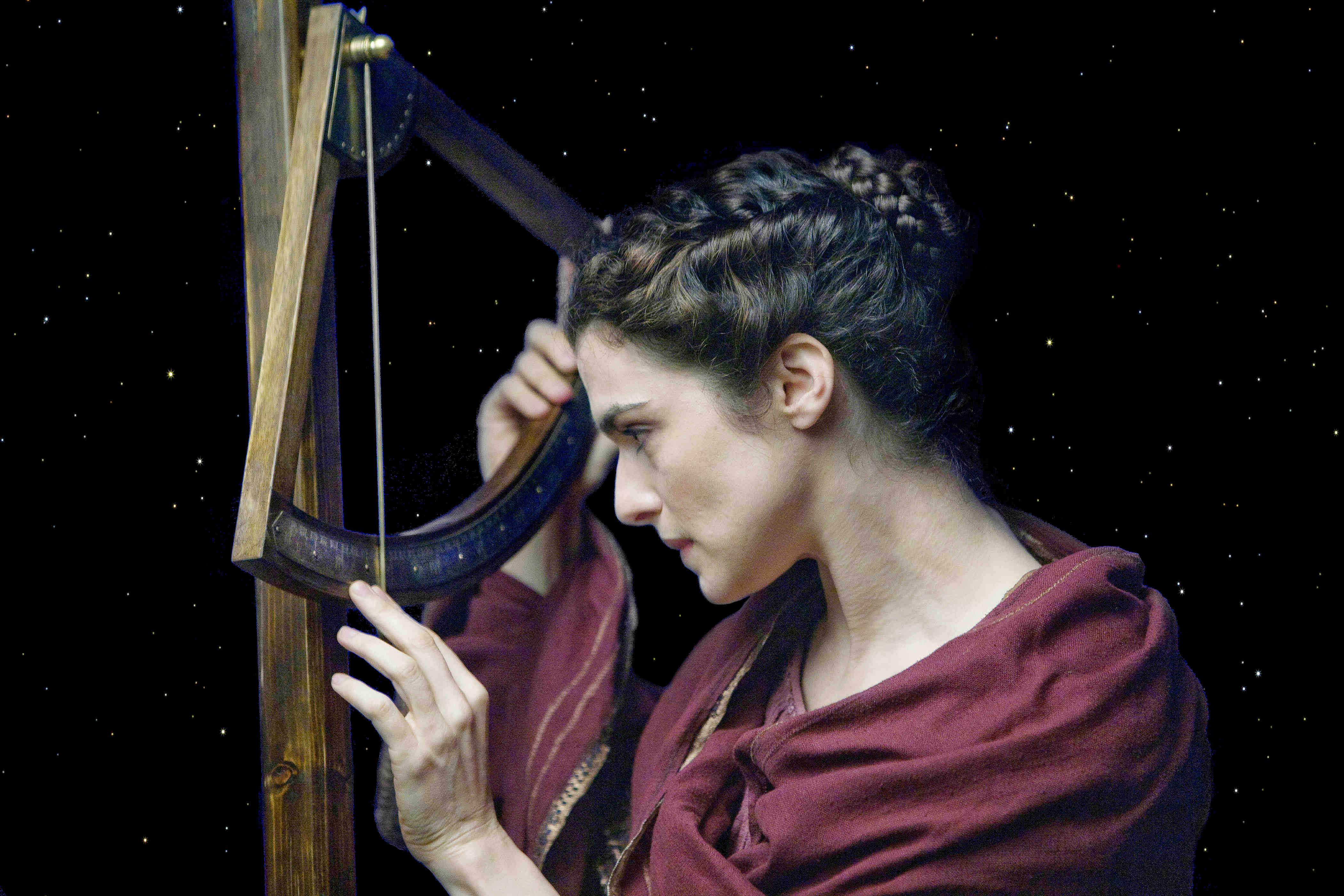


Synesius: Why do you insist in questioning things? Can't you just accept truth?
Hypatia: You have your religion. I'm a philosopher. You don't question what you believe. I must.
* excerto do filme Ágora


The Bishop's words struck at the heart of Raphael's original artistic conception. It had been the artist's intention to depict Hypatia standing alone in the center foreground, located, spatially, between the viewers of the fresco and the central figures of Plato and Aristotle, as homage to her unique role, temporally, as guardian and transmitter of their ancient wisdom and inquiring spirit to their intellectual heirs in future eras.
Yielding to the power of the purse strings, Raphael's initial reaction was simply to omit the figure from his final working drawing, but he then proceeded instead to disguise his original intention as an intimate gesture to his holy patron. In an area which had been vacant in the preliminary compositional sketch, directly behind and between the images of Pythagoras and Parmenides, the artist's final working drawing, the “cartoon” (detail), bears the image of Hypatia, her dark skin recast to a very pale white and her facial features altered to resemble those of the “beloved” nephew of the Pope. Raphael thereby restored Hypatia to a rightful place in his masterpiece among her intellectual peers.
While the figure of Hypatia was displaced and disguised, her posture and demeanor were preserved. Unlike almost all of the other characters in the fresco, Hypatia is depicted, not engaged in philosophic inquiry with her peers, but instead directing her gaze out of the painting, towards the viewer standing in front of the fresco. The only other figures so depicted are those of the historian, Diogenes of Laertius, and the artist himself. Raphael thereby symbolizes the roles of the chronicler, the curator, and the artist in projecting, into the future, the intellectual and spiritual thrust of the School of Athens.
(Also, whereas the figure of Hypatia was displaced, the figure of Heraclitus is the only major figure in the entire work that was totally absent from Raphael's final working drawing, the “cartoon”, of all the figures in the fresco. In fact, subsequent examination of the fresco confirms that the figure of Heraclitus was painted in on an area of fresh plaster put on after the adjacent figures were completed. This block-like figure plugged up the visual hole, the expanse of marble steps and flooring in front of Plato and Aristotle, left unoccupied by Hypatia's displacement.)
Thus, the effeminate, white-robed figure in Scuola di Atene serves here to represent the first significant female philosopher, and the last philosopher, of the ancient age. The pale complexion and juvenile visage of Pope Julius II's beloved nephew was apparently sufficient distraction to have prevented the Pope's recognition of Raphael's representation of Hypatia of Alexandria, an official enemy of the Church, whose martyrdom at the hands of Nitrian monks had signaled the death of the classical world.
fonte

 Hypatia and the Philosophers of Alexandria


